

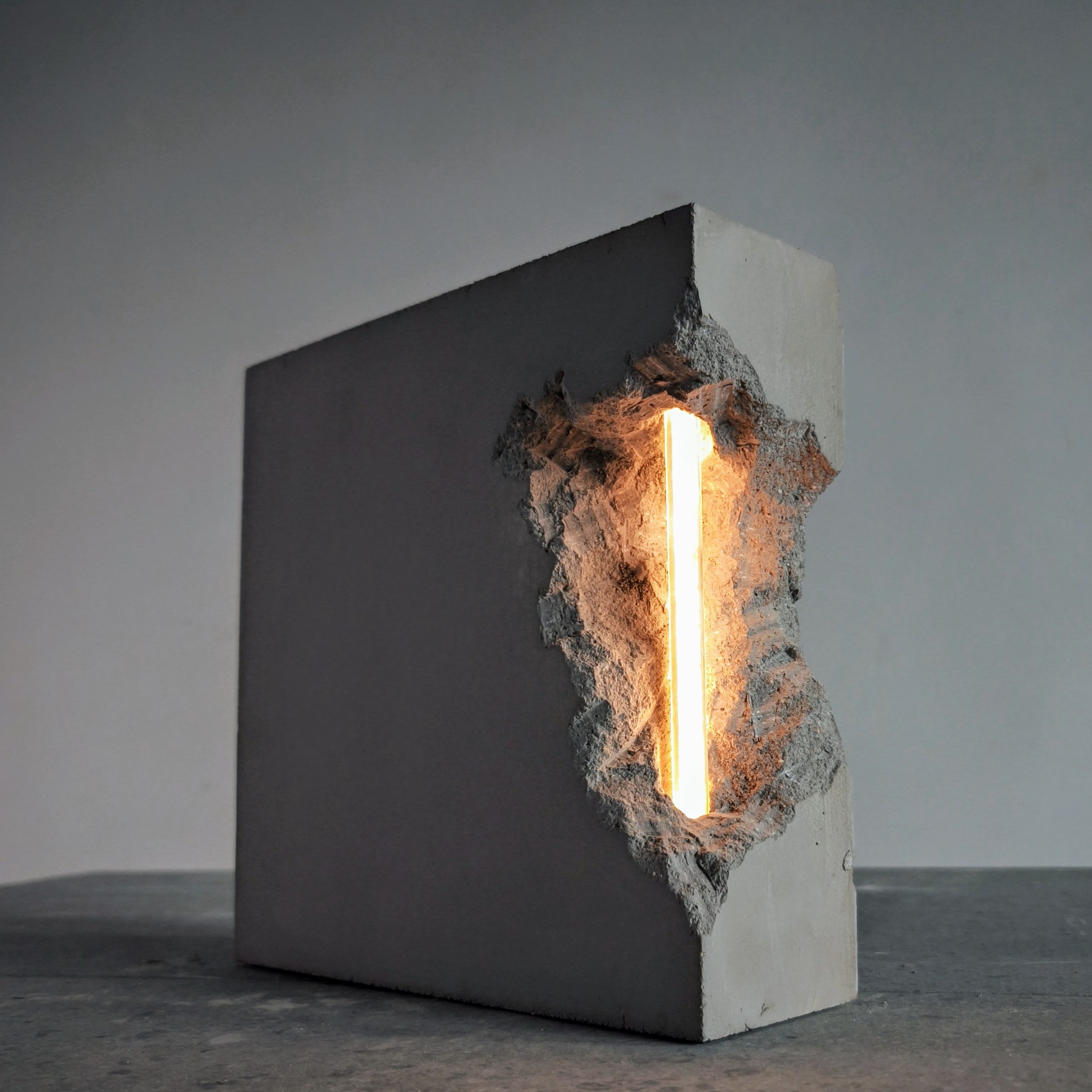
20 × 20 cm illuminated concrete sculpture, handcrafted in Madrid.
Fracture Model 001 originates from a monolithic concrete block manually intervened through a non-reproducible fracture that exposes the interior of the mass and releases a warm line of light contained within.
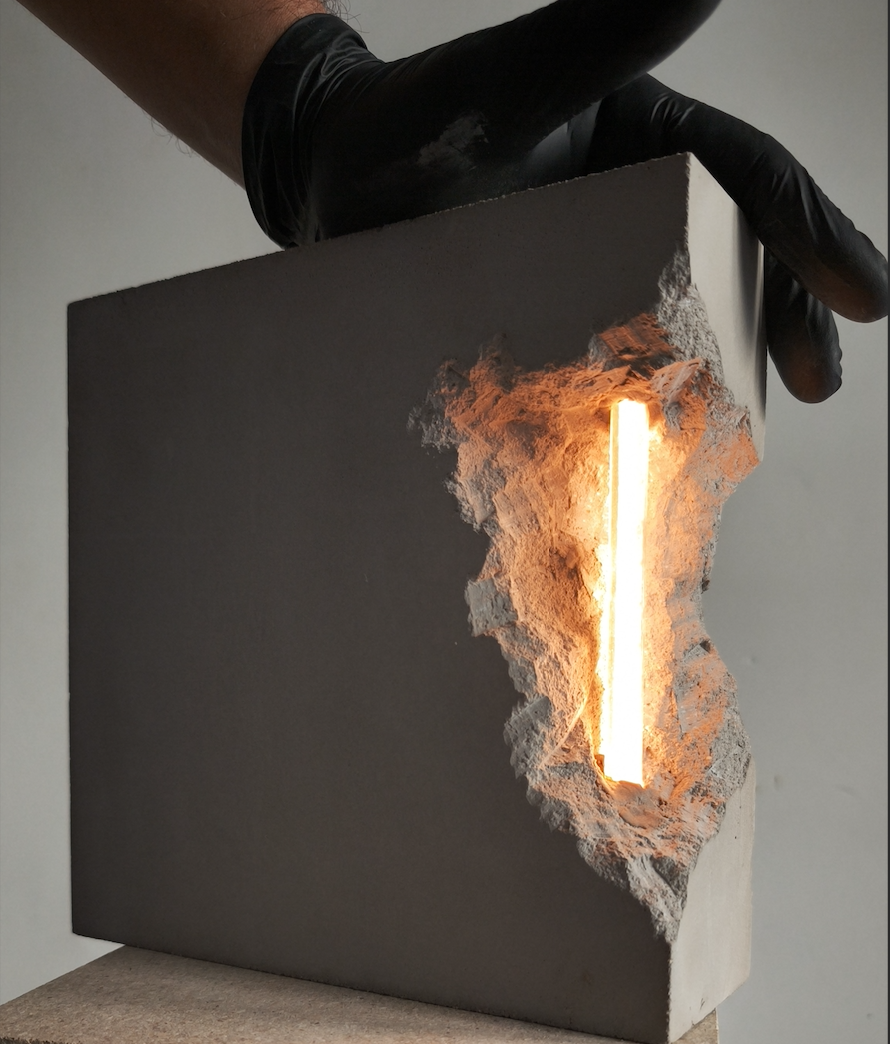
Each piece undergoes a fully manual production process ranging from mold construction to the final assembly of the lighting system, including pouring, setting, fracturing, curing and drying, among other stages.
The edition is limited to a maximum of one hundred numbered units.
One unit currently available in stock — ships within 72h in Spain.
.
Matter, fracture and light
Fracture Model 001 explores the tension between geometric order and material violence.
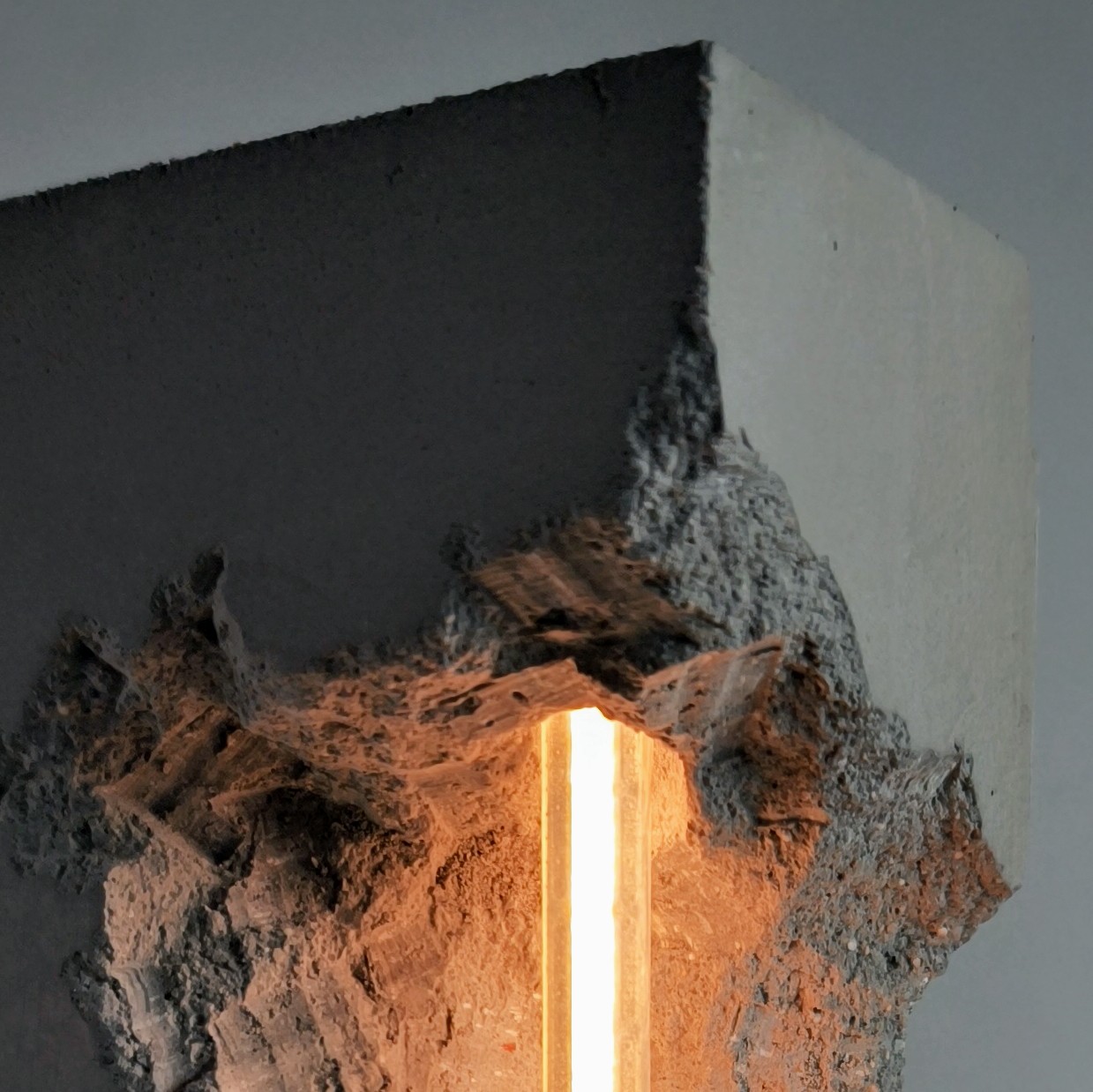
The piece maintains a stable architectural presence until a manual fracture cuts through the volume and completely alters the reading of the object. The surface does not appear cut or designed: it appears torn open, eroded, ruptured from within.
The light does not illuminate the block from the outside. It exists within the fracture.
Concrete absorbs the light.
The rupture reflects it.
Mineral dust diffuses it.
The result is a warm, mineral and contained glow that seems to emerge from inside the mass itself.
| Reference | GCFR001XXX |
| Material | Concrete, sand, aluminum and integrated COB LED system |
| Dimensions | Approximately 20 × 20 × 7 cm |
| Weight | Approximately 5 kg |
| Lighting | Integrated warm COB LED system |
| Power | 12W |
| Voltage | 12V |
| Color temperature | 3000K — warm light |
| Optional control | IR remote controller |
| Use | Interior sculptural piece |
| Edition | Limited to 100 numbered units |
Material singularity
Each unit presents natural variations in:
- surface texture
- microporosity
- mineral density
- fracture geometry
- aggregate distribution
No two pieces are identical.
Visible irregularities are part of the material language and sculptural process of the work itself.
Designed to function as a sculptural object for console tables, shelves, desktops or exhibition spaces.
Fracture Model 001 belongs to the Fracture Line, a series that approaches concrete not as a neutral surface but as matter subjected to tension.
The piece begins as a stable, almost industrial orthogonal prism. A silent, heavy and contained volume whose geometry conveys absolute order.
The intervention disrupts this initial state through a manual fracture that completely alters the logic of the object. The surface does not appear machined or decorated: it appears torn open. Concrete reveals internal strata, exposed aggregates, eroded areas and pulverized matter surrounding the opening.
It is not a technical perforation. It is a structural wound.
The piece exists precisely within that contradiction: geometric control versus material violence.
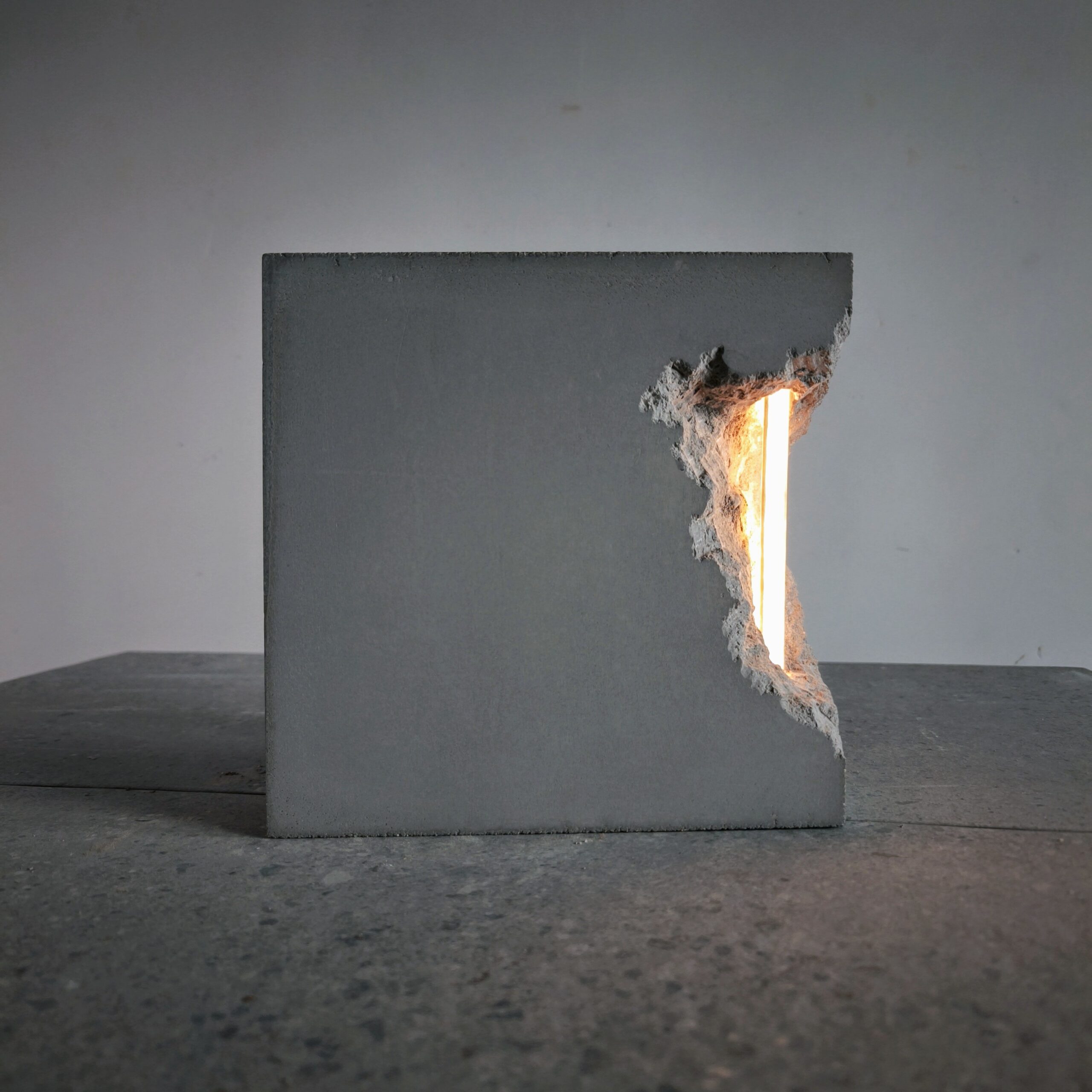
Inside the fracture, a perfectly controlled vertical line of light emerges. The irregular and eroded exterior gives way to a precise and stable technical core.
Light does not function here as decorative illumination. It behaves as energy contained within the mass.
Concrete absorbs the light while the fracture reflects it and the mineral dust diffuses it, generating a warm glow that seems to emerge from inside the block itself.
The piece does not represent destruction, but release.
There is a direct connection to brutalism, though displaced into a sculptural territory. Brutalism exposed construction, structure and matter. Here, the work reveals the moment of rupture.
Architecture subjected to tension.
The fracture is positioned off-center within the volume, avoiding symmetry and generating visual direction. The energy does not appear stable: it seems to escape laterally from within the object.
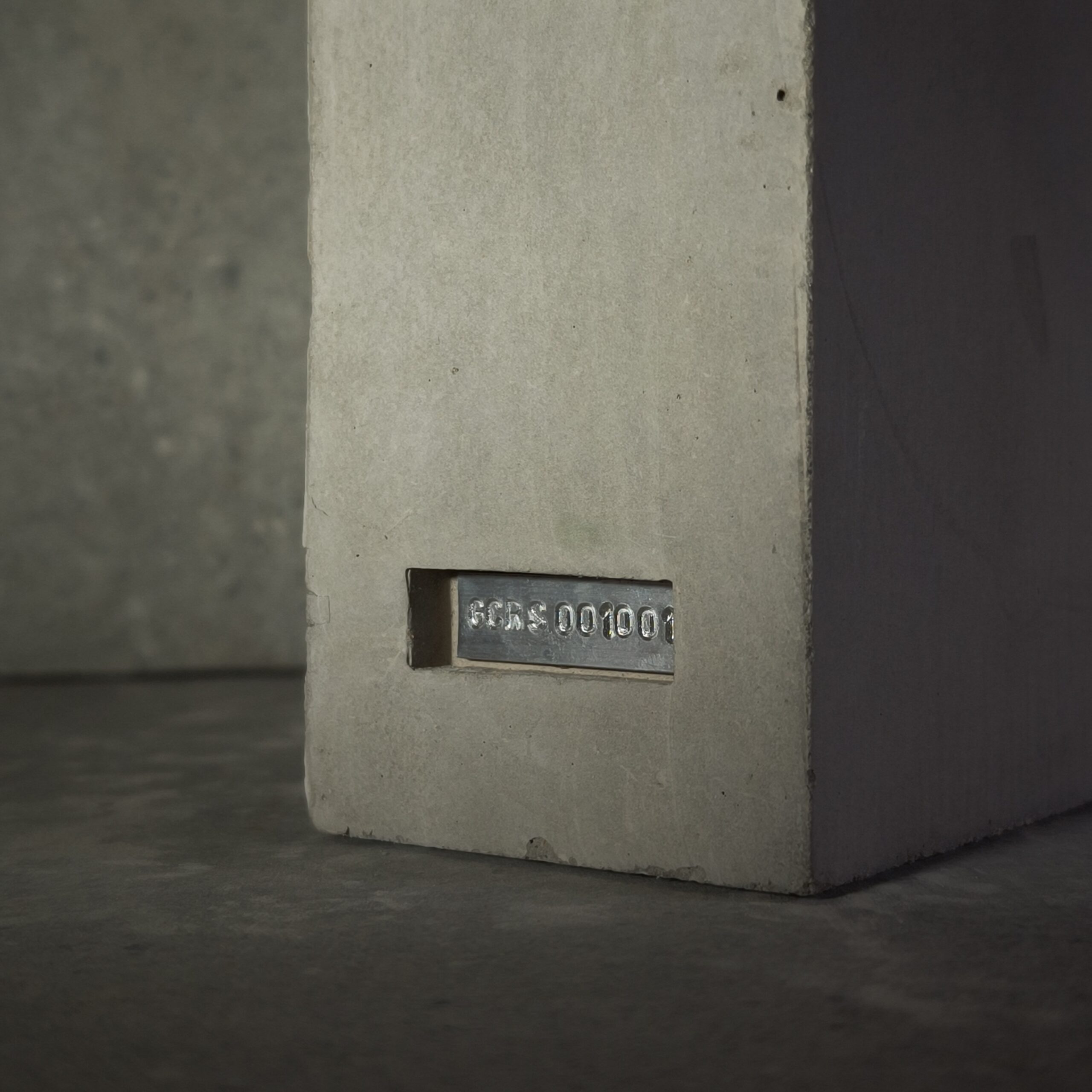
Each unit incorporates an integrated identification plate and belongs to a limited edition of one hundred numbered pieces.
Each fracture is irreproducible.
Production and authenticity
Each piece is individually produced through a manual process involving mold construction, pouring, setting, fracturing, curing, drying and final assembly of the lighting system.
All units include:
- integrated identification plate
- individual numbering
- certificate of authenticity
Designed exclusively for interior use.
Not suitable for prolonged outdoor exposure.

